

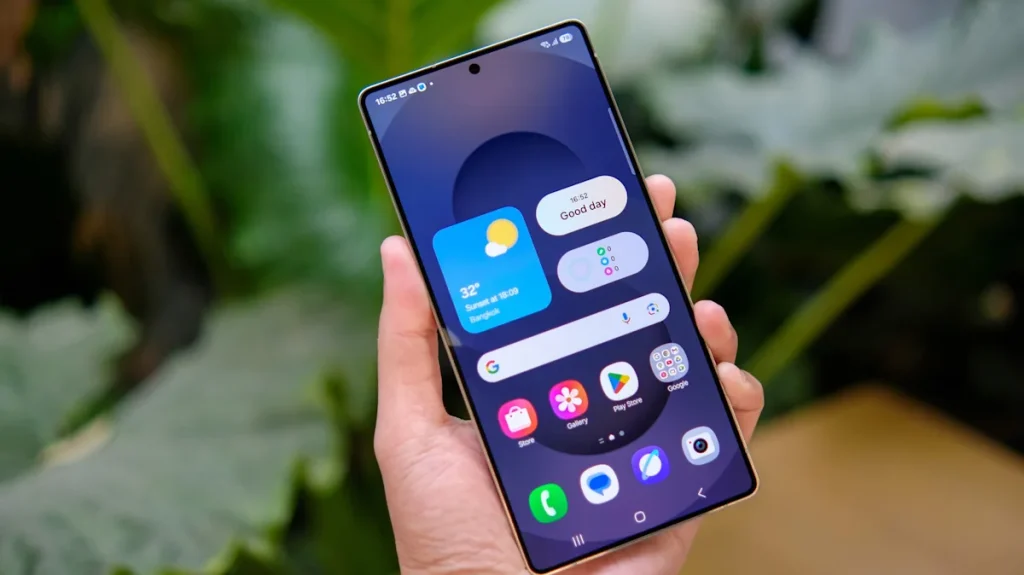
First of all, restart your device during match night to keep everything running smoothly. The reboot will help eliminate stuck services, free up RAM, and reset the radios that may have been affected since your device has been on for days. After the restart, it is recommended that you turn off any heavy background apps, such as the camera, maps, video editors, or other apps that may use your CPU/GPU or GPS. It is also a good idea to keep 2–3 GB of storage free so that buffering and caching can take place without any obstacles when the stream is suddenly increased.
For older phones, it is advisable to change the screen refresh rate to Standard (60 Hz) if you want to lower the phone’s heating and decrease the throttling that occurs during long periods of use. For Wi-Fi, use the 2.4 GHz band if you are far from the router or are behind walls, as it penetrates better than the 5 GHz band in most homes. If you are close to the router and require higher throughput, 5 GHz is a good option – make sure the connection is stable before the first ball. Finally, disable Bluetooth if you’re not using it; idle radios can add interference and drain battery. These basics prevent mid-over slowdowns and keep your device cool enough to sustain the chase.
Keep It Smooth: Video, Network, and Thermal Basics
When congestion hits, drop the stream one notch – 1080 → 720 – to stabilize frames, and lock 30 fps if the phone warms up. Mid-sentence anchor example: If stutter persists, fans often check this website to understand temperature/clock behavior, then adjust brightness or resolution accordingly. Cap display brightness around 60-70%; it’s a major heat source on older panels.
Turn auto-rotate off so accidental tilts don’t force layout changes during a key delivery. If your case traps heat, switch to a vented cover or remove bulky layers for the innings. On weak towers, prefer LTE-only over flaky 5G; fewer band hops mean steadier latency. Also disable VPNs unless required – extra hops add jitter right when you need consistency. Combine these with short cool-downs during ads or drinks: lock the screen for 30 seconds, then resume. The goal isn’t max quality at all costs; it’s the smoothest continuous stream your phone can sustain across a full T20 without throttling, frame drops, or surprise app kills.
App Settings That Matter (So You Don’t Miss a Ball)
Small toggles decide whether your stream survives tense overs. Start by exempting the streaming app from power limits: battery savers and aggressive OS optimizations pause background fetch, kill playback on lock, or delay notifications. Give the app unrestricted battery, allow background activity, and disable “sleep when unused.” Next, reduce asset churn. Clear cache before the match and, where possible, pre-download team graphics so mid-innings swaps don’t stutter. Visual clutter also costs performance: floating chats, screen bubbles, and heavy overlays steal GPU cycles and invite accidental taps.
Keep subtitles minimal and only when needed; they render each frame and can add heat on older devices. Picture-in-Picture is handy, but only enable it if your battery stays above 50% and device temperature is stable – otherwise it splits resources and risks throttling. Finally, confirm notifications are set to “alert silently” for the streaming app, not “deliver quietly,” so key prompts arrive without stealing focus.
Settings to review before first ball
- Turn off battery saver and OS optimizations for the streaming app.
- Pre-download team assets; clear cache pre-match.
- Disable overlays (bubbles, floating chats); keep subtitles minimal.
- Allow Picture-in-Picture only if battery >50% and device is cool.
Wrap-up: prioritize steady playback over cosmetic layers. When the app can buffer freely, render simply, and stay awake in the background, you watch continuously – and those last two overs feel smooth, not stressful.
Second-Screen Without Slowdowns
A productive second screen helps, but only if it stays light. Use compact score widgets that refresh sparingly, and mute non-match push alerts during overs to prevent notification storms. Pin a single replay source so everyone returns to the same place; app-switch whiplash is where drops and audio desync begin. If the phone warms, trim haptics and stadium SFX; they’re fun but CPU-active.
Prefer wired headphones where possible – Bluetooth introduces extra radio work and, on older phones, adds latency. Share moment cards (score, over, outcome) instead of full clips; they’re faster to create, lighter to send, and clearer for the group thread. Keep gestures simple: one tap to open, one swipe to dismiss, and a fixed back path to the stream. Aim for a rhythm – check, react, return – that never steals more than 30-90 seconds from the live ball.
Quick Match-Night Checklist (60 seconds)
When the toss is done, you don’t have time for a full tune-up – just a fast, reliable setup. Run this 60-second checklist and you’ll trade tiny luxuries for a stream that stays smooth all innings.
- Wi-Fi stable; VPN off; brightness ≤70%.
- Resolution/fps conservative (720p/30 if warm); battery saver off for the app.
- Background apps closed; free storage ≥2 GB.
- Auto-rotate off; notifications for non-match apps muted.
- Overlays disabled; subtitles off unless needed.
- LTE-only on weak towers; remove bulky case if hot.
- Headphones wired (if available); haptics/SFX reduced when warm.
- Power bank connected for long chases; cable routed to avoid accidental pulls.
This one-minute pass locks in stability. You trade a bit of visual polish for uninterrupted play, keeping frames steady from first ball through the final over.