

In this globalized world, the messaging application such as WhatsApp and Telegram apps take over our online communications. Although both have their group of loyal users, there are numerous people who operate in both platforms to keep in touch with various groups. The interface and the process of other platforms may trigger a slight language barrier among Chinese-speaking Telegram users. This paper seeks to fill that gap by giving a step-wise account of the WhatsApp Web Version Login process available to Telegram Chinese users. Learning to use WhatsApp desktop client to the full extent of your productivity and communication can boost your productivity and communication efficiency as you do with Telegram.
Awareness of the Concept: WhatsApp Web and Its Use
Like the desktop app at Telegram, WhatsApp Web is an extension of your Whatsapp account on the phone to a browser. It replicates everything you chat and message on to your computer monitor where you can comfortably type and share files on your desktop. This idea will not be new to Telegram Chinese users, since Telegram provides almost the same multi-device experience. The fundamental distinction is in the first set up and connection procedure. Where Telegram frequently provides the use of QR codes or cloud-based synchronization, the WhatsApp Web Version Login will only be based on a QR code scan on your main phone. This will be secure, only that you will need your phone connected to the internet during the first pairing.
Getting Ready to WhatsApp Web Version Login
You have to have the tools ready before you set in to the WhatsApp Web Version Login. To start with, you have to install and configure the typical WhatsApp application on your smart phone. The phone needs to have internet connection. The second step is to open your favourite web browser on your computer, either Chrome, Firefox or Edge. This process must be done on a secure and personal computer to ensure that the message is secured. To Telegram中文 users, who are used to the Telegram only having its independent desktop clients, be aware that WhatsApp Web is not a standalone application but a linked one; it cannot work without your phone being on and connected.
WhatsApp Web: Step-by-Step Guide to the Login Process
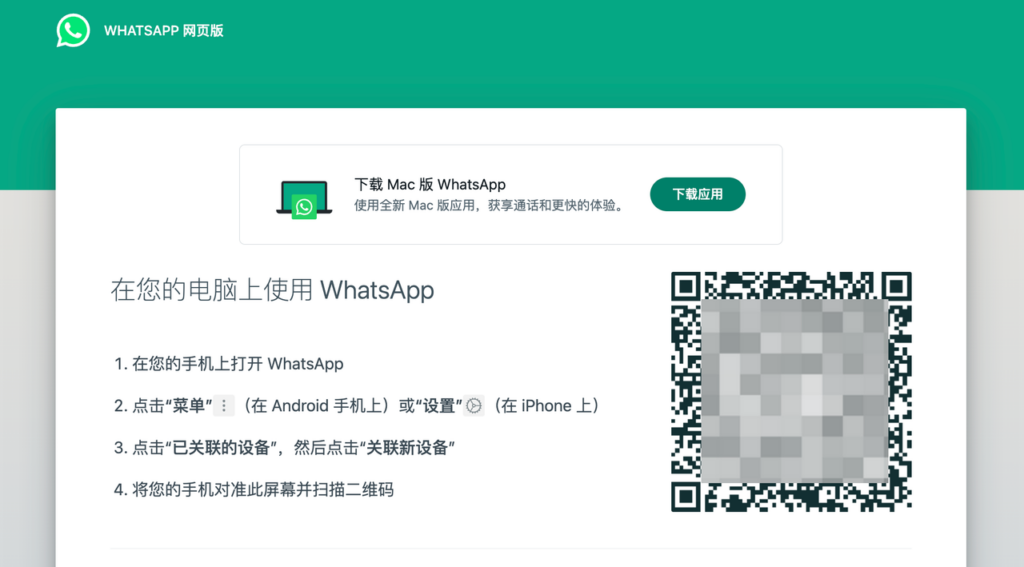
We are now going to follow the actual procedure of WhatsApp Web Version login. Go to the official site on the browser of your computer: web.whatsapp.com. On the screen, there will be a massive QR code. Now, you need to pick up your smartphone and launch the WhatsApp application. In Android, press the three-dot menu in the upper right hand corner; in iPhone, press the “Settings” tab. In the menu, you should tap on Linked Devices then on the option of Link a Device. The camera of your phone will come on. To scan a QR code with your phone, point the camera of your phone on the QR code on the computer screen. The scan is instantaneous. When that is identified, your Whatsapp网页版登入 is finished and your chats will start appearing on the computer screen. These are to some extent analogous to the Logging in to Telegram Web, to Telegram they may provide additional permanence with regard to the independence of a session.
Security Issues and Session control
Security is paramount. The Whatsapp Web Version Login process is expected to be quite safe, since you have to have access to your primary phone physically. Always keep in mind to leave the common or shared computers after clicking on the three-dot menu on the WhatsApp Web and tapping on the log out. You have also the ability to manage all the connected computers through your phone in the “Linked Devices” section, it is here that you are able to log out of any location remotely. This call of control is an addition that Telegram Chinese users will value since the two sites emphasize on user security though the interface is organized differently. Do not read a QR code that is provided by an untrusted source as it may hack into your account.
An Experiences Compare and Contrast WhatsApp Web and Telegram Desktop
Like other Telegram Chinese users, you may find some major differences upon doing a WhatsApp Web Version Login. The desktop applications of Telegram can give the impression that you are more autonomous with the option to call and send messages even when your phone is switched off, as the platform is based on cloud computing. WhatsApp Web is, however, a reflection. In case of phone battery loss or failure to access the internet, the web client will ultimately become disconnected. This is a basic architecture difference that determines user experience. However, when it comes to simple messaging and file transfer, both variants of the Web offer a powerful and convenient experience that will allow you to get outside the small screen of your mobile phone.
Troubleshooting Problems with Logging In
The WhatsApp Web Version Login is prone to hiccups sometimes. In case the QR code is not scanned, then make sure that the camera of your phone is clean and that there is plenty of light. Ensure that you have a strong internet connection in your phone and computer. In case the page is not responding, reload the web.whatsapp.com page to get another QR code then attempt to scan again. Loading problems can also be solved by clearing your browsers. These simple troubleshooting steps will be applicable to Telegram Chinese users with similar issues on other platforms and in general, it is a good first attempt at troubleshooting technical issues.
Conclusion
Learning how to use the WhatsApp Web Version Login will make a new stage of convenience available, particularly to power users who have already oriented themselves within the functionality of Telegram Chinese websites. The core advantage behind the two services is the same, though the underlying technology and session control is different, i.e. increased productivity and an easier messaging experience on a bigger screen. This step-by-step guide will enable Chinese Telegram users to install and use WhatsApp Web without any doubts and consider it an inseparable part of their everyday online life. Adopt the functionality of the two platforms so that you are always connected irrespective of which device you opt to use.